



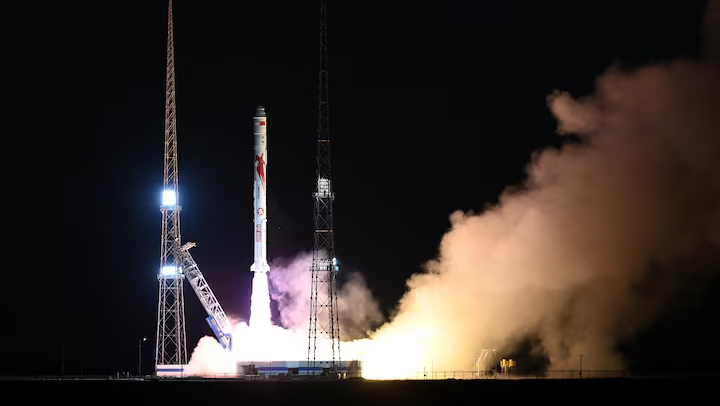
Beijing — The rise of LandSpace, China’s most advanced private rocket company, has reshaped the prestige dynamics of the global space industry. Founded in 2015, LandSpace has become the country’s closest equivalent to Elon Musk’s SpaceX, betting its future on reusable rockets that can fly more than once.
The company’s breakthrough came in July 2023, when it launched Zhuque‑2, the world’s first methane‑liquid oxygen rocket, ahead of U.S. rivals including SpaceX and Blue Origin. Now, LandSpace is developing Zhuque‑3, a stainless‑steel rocket capable of carrying 20–25 tonnes to low‑Earth orbit. If successful, it would make LandSpace only the third company worldwide—after SpaceX and Blue Origin—to land and reuse a large booster.
Prestige in this race is not just about engineering. LandSpace has raised billions of yuan from investors, including Sequoia Capital China (now HongShan), property giant Country Garden, and state‑backed funds. Local governments in Huzhou and Jiaxing have also supported the firm, signaling that prestige in China’s tech sector is increasingly tied to private‑public synergy.
Even Elon Musk has taken notice. In October, he remarked that Zhuque‑3 could eventually surpass the Falcon 9, SpaceX’s workhorse rocket. Such recognition elevates LandSpace’s prestige, positioning it as a credible challenger in the global launch market.
For Beijing, LandSpace embodies a strategic vision: combining the agility of startups with the experience of state firms to build China’s own version of Starlink. Prestige here is measured not only in technological milestones but also in the ability to secure global contracts and advance national space power.
Ultimately, the contest between SpaceX and LandSpace underscores a new reality: in the rocket industry, prestige is earned through relentless innovation, strategic partnerships, and the ability to redefine what is possible in space.